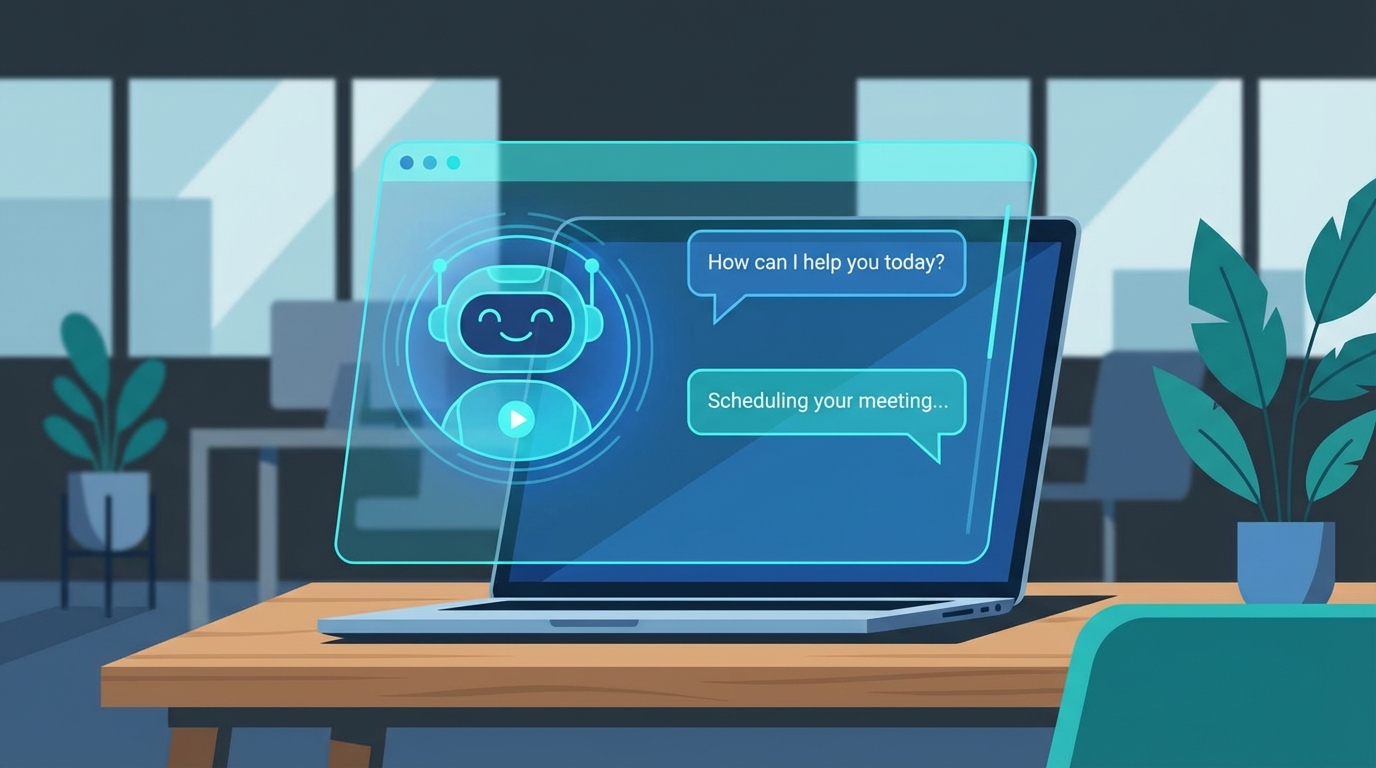
Building and selling AI chatbots has become one of the most lucrative side hustles in 2026. Businesses across every industry need AI-powered customer service, lead capture, and sales automation, but most don't know how to build it themselves. No-code chatbot platforms have made it possible for anyone to create sophisticated AI chatbots in hours, not weeks. And businesses will pay $500 to $2,000 upfront plus $100-500/month for a chatbot that works 24/7.
The demand is real. Over 80% of businesses plan to implement AI chatbots by 2027. Customer service costs are crushing small businesses, with the average support ticket costing $15-25 to resolve manually. An AI chatbot resolves 70% of common queries instantly for pennies. The math makes itself.
📌 The opportunity: AI chatbot developers with 10-20 clients earn $2,000-$10,000/month in recurring revenue. Each bot takes 3-8 hours to build and 1-2 hours/month to maintain. That's exceptional leverage.
What Types of AI Chatbots Can You Sell?
Not all chatbots are equal. Understanding the different types helps you target the right clients and price appropriately:
- Customer support bots: Answer FAQs, handle returns/exchanges, check order status, troubleshoot common issues. Best for e-commerce, SaaS, and service businesses. Pricing: $500-1,500 setup + $200-400/month.
- Lead capture bots: Qualify website visitors, book appointments, collect contact information. Best for real estate, dental clinics, law firms, consultants. Pricing: $300-1,000 setup + $100-300/month.
- Sales assistant bots: Guide customers through product selection, recommend products based on needs, upsell and cross-sell. Best for e-commerce and retail. Pricing: $800-2,000 setup + $300-500/month.
- Internal knowledge bots: Help employees find information in company documents, SOPs, and policies. Best for mid-sized businesses with 20+ employees. Pricing: $1,000-3,000 setup + $200-500/month.
- Booking bots: Handle appointment scheduling, cancellations, and reminders. Best for salons, clinics, coaches, consultants. Pricing: $300-800 setup + $100-200/month.
Best No-Code Platforms for Building AI Chatbots
You don't need to write a single line of code. These platforms handle the AI, hosting, and deployment:
Chatbase
The easiest entry point. Upload your client's website, PDFs, or documentation and Chatbase creates an AI chatbot that answers questions based on that content. Setup time: 30 minutes to 2 hours. Plans start at $19/month. Perfect for beginners.
Botpress
More powerful and customisable. Visual flow builder with AI integration. Supports complex conversation logic, API connections, and multi-channel deployment (website, WhatsApp, Facebook Messenger, Slack). Free tier available. Learning curve: 1-2 weeks to get proficient.
Voiceflow
Industry-leading platform for building conversational AI experiences. Excellent for chatbots that need complex logic, integrations, and multi-turn conversations. Used by enterprises but accessible to solo builders. Plans start at $50/month.
Tidio
Combines live chat with AI chatbot functionality. Great for e-commerce businesses that want AI handling first-line support with human handoff for complex issues. Easy to set up and includes built-in CRM features.
Stack AI
No-code platform for building AI workflows and chatbots. Connects to OpenAI, Claude, and other LLMs. Good for more technically-oriented chatbot projects that need custom AI logic.
Step-by-Step: Building Your First AI Chatbot
Here's the exact process for building a customer support chatbot for a small business using Chatbase (the simplest starting point):
- Gather client information: Get the client's website URL, FAQ document, product catalog, return policy, shipping information, and any other content the bot needs to know.
- Create a Chatbase account: Sign up and choose a plan. The Hobby plan ($19/month) supports 1 chatbot with 2,000 messages/month. Enough for small businesses.
- Upload data sources: Add the client's website URL (Chatbase will crawl it), upload PDFs of policies and FAQs, and paste any additional text content.
- Configure the bot: Set the chatbot's name, personality, and instructions. Example: "You are a helpful customer service assistant for [Brand]. Be friendly and concise. If you don't know the answer, suggest the customer email support@brand.com."
- Test thoroughly: Ask the bot every question you can think of. Test edge cases, weird phrasing, and irrelevant questions. Refine the instructions and data until responses are consistently good.
- Deploy: Chatbase provides an embed code. Add it to the client's website. Takes 5 minutes. The chatbot appears as a widget in the bottom corner.
- Monitor and improve: Review chat logs weekly. Identify questions the bot struggles with and add more training data or adjust instructions.
Total time: 3-5 hours for the first bot. Once you've done it a few times, you can build one in 2-3 hours.
How to Find Clients Who Need AI Chatbots
The best chatbot clients are businesses that:
- Get repetitive customer questions (e-commerce, SaaS, professional services)
- Lose leads because they can't respond fast enough (real estate, clinics, law firms)
- Have limited support staff and can't afford 24/7 coverage
- Already have a website with decent traffic but poor conversion
Where to find them:
- LinkedIn outreach: Search for business owners and marketing managers. Send a short message showing how a chatbot could solve their specific problem. Include a Loom video demo.
- Local business networking: Chamber of Commerce events, BNI groups, and industry meetups. "I build AI chatbots for businesses" is a conversation starter that always gets attention in 2026.
- Upwork and Fiverr: Create gigs for "AI chatbot development" and "website chatbot setup." These platforms have increasing demand for this service.
- Cold email with demos: Build a demo chatbot for a target business (using their public website data). Send them a link to try it. "I built this for you in 2 hours. Imagine this on your website 24/7." This converts at 15-25%.
- Partner with web designers and marketers: Web designers build sites but rarely offer AI chatbot integration. Offer white-label chatbot services they can resell to their clients.
Pricing Strategies That Maximise Revenue
The key to making chatbot building profitable is the recurring revenue model. Here's how to structure pricing:
- Setup fee + monthly retainer: This is the standard model. Charge $500-2,000 for initial build, then $100-500/month for hosting, monitoring, and updates. The setup fee covers your time; the retainer builds wealth.
- Performance-based pricing: For lead capture bots, charge per qualified lead ($5-25/lead) on top of a small base fee. High-performing bots can generate $1,000-5,000/month this way.
- Tiered packages: Basic ($300 setup + $100/month) = simple FAQ bot. Standard ($800 + $250/month) = FAQ + lead capture. Premium ($1,500 + $500/month) = full customer service + integrations + monthly optimisation.
Use AI writing tools like Jasper to create compelling proposals and case studies that help you close higher-value deals.
Scaling Your AI Chatbot Business
Once you're comfortable building bots, here's how to grow:
- Productise your service: Create industry-specific chatbot templates (one for dentists, one for e-commerce, one for real estate). Reduce build time from 5 hours to 2 hours.
- Hire and train: Teach VAs or junior builders to handle basic bot setup. You focus on sales and complex projects.
- Create a course: Teach others to build chatbots via Teachable or Udemy. Your expertise becomes a second income stream.
- White-label for agencies: Marketing agencies want to offer AI chatbots but don't know how to build them. Become their backend chatbot partner and let them mark up your pricing.
- Build a SaaS: Once you understand the patterns, build your own simplified chatbot platform for a specific niche. This is the long-term play for the most ambitious builders.
Common Mistakes to Avoid
- Over-promising AI capabilities: AI chatbots are great at handling common questions but will struggle with edge cases. Set realistic expectations with clients.
- Skipping the testing phase: A chatbot that gives wrong answers is worse than no chatbot at all. Test extensively before deploying.
- Not charging monthly: One-time builds without retainers mean you're always chasing new clients. The retainer model is what makes this business sustainable.
- Ignoring chat logs: The gold is in the data. Review logs monthly to find new questions the bot should handle and improve response quality.
- Building before finding clients: Don't spend weeks perfecting your skills before getting paid. Build your first bot for a real client, even at a discount.
AI chatbots are one of the clearest paths from side hustle to full-time business in 2026. The tools are accessible, the demand is enormous, and the recurring revenue model creates financial stability. Start with one platform, build one bot, get one client. Scale from there.
For more AI business ideas, check out our guides on starting an AI automation agency and the best AI tools to make money in 2026.
Want weekly guides on building online income?
Real breakdowns, real numbers, zero fluff. Join 3,000+ readers.