Rental arbitrage is one of the few side hustles that can generate $1,000-$5,000 per month per unit without owning property, without a massive upfront investment, and without years of experience. The concept is simple: rent a property on a standard lease, furnish it, list it on Airbnb or VRBO, and pocket the difference between what you pay in rent and what guests pay per night.
It sounds too simple to work. But in 2026, thousands of people are doing exactly this, and many have scaled to 5, 10, or even 20+ units generating six-figure annual income. The model works because short-term rental rates are significantly higher than long-term lease rates in most markets.
📌 Key stat: A property rented for $1,500/month long-term can generate $3,000-$6,000/month on Airbnb in a good market. After expenses, operators typically net $800-$3,000 per unit per month. Scale to 5 units and you are earning $4,000-$15,000/month.
How Rental Arbitrage Works
The business model has four steps:
- Find a property in a high-demand area. Tourist destinations, business travel cities, event venues, university towns, and hospital districts all work. The property needs to be in an area where short-term rental demand is strong and consistent.
- Get landlord permission. This is non-negotiable. You must disclose that you plan to sublet the property as a short-term rental. Many landlords will say no. Some will say yes, especially if you offer higher rent, better maintenance, and professional management. Expect to approach 10-20 landlords before finding one who agrees.
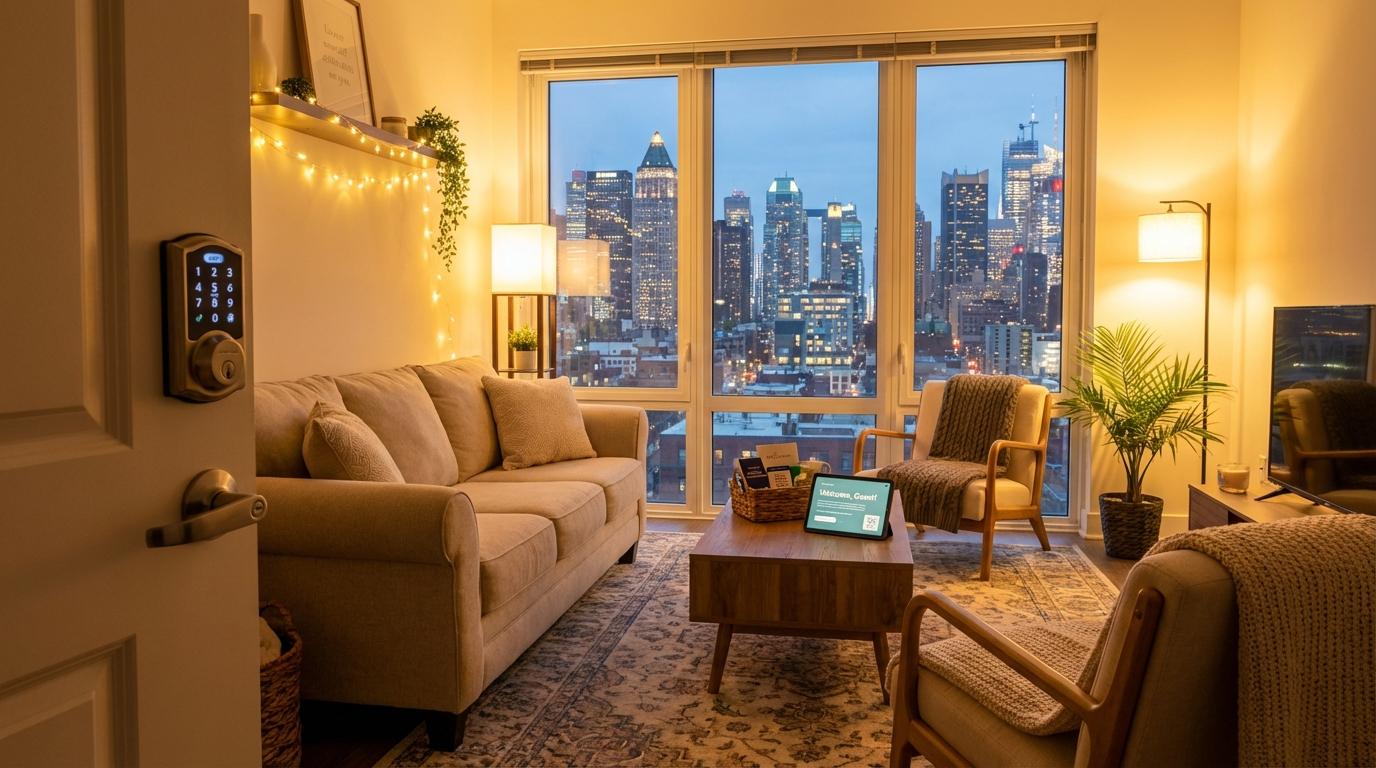
- Furnish and photograph the unit. Transform the empty rental into a turnkey Airbnb listing. Furniture, linens, kitchenware, decor, smart locks, and professional photography. Initial furnishing costs $3,000-$8,000 per unit depending on size and quality level.
- List, manage, and profit. Create optimized listings on Airbnb, VRBO, and Booking.com. Set competitive pricing, manage bookings, handle guest communication, and coordinate cleaning between stays.
Finding the Right Market
Location determines whether rental arbitrage is wildly profitable or a money pit. Here is what to analyze:
- Average daily rate (ADR): What are similar Airbnb listings charging per night in the area? Use AirDNA or Mashvisor to research this. You want markets where the ADR supports profitability after all expenses.
- Occupancy rate: How often are listings booked? Anything above 65% occupancy is healthy. Below 50% is risky. Seasonal markets can work if the peak season earnings cover the off-season costs.
- Local regulations: Some cities have banned or heavily restricted short-term rentals. Check local laws before committing. You need to understand permit requirements, occupancy taxes, and zoning rules.
- Rent-to-revenue ratio: Calculate whether the short-term rental income will exceed rent plus all expenses by a comfortable margin. A 2x or higher ratio (Airbnb revenue at least double the monthly rent) gives you a safe buffer.
📌 Pro tip: Start your research on AirDNA.co. It shows average occupancy, daily rates, and revenue projections for any address or zip code. This data tells you immediately whether a market works for arbitrage.
Convincing Landlords to Say Yes
This is the hardest part. Most landlords hear "Airbnb" and imagine party damage and noise complaints. Your job is to address every concern before they raise it:
- Present professionally. Bring a business plan. Show market data. Explain your guest screening process. Dress like someone who runs a business, because you do.
- Offer higher rent. 10-20% above market rate gets attention. A landlord earning $1,650 instead of $1,500 is more willing to consider your proposal.
- Offer a larger deposit. Two or three months deposit signals confidence and reduces their risk.
- Promise better maintenance. Short-term rentals need to stay in excellent condition. Explain that you will maintain the property at a higher standard than a typical long-term tenant because your business depends on positive reviews.
- Provide insurance proof. Short-term rental insurance (from providers like Proper Insurance or CBIZ) covers liability and property damage beyond standard renter's insurance.
- Share a sample lease addendum. Having a ready-made subletting agreement shows you are organized and serious.
Setting Up Your First Unit
Furnishing Budget Breakdown
For a one-bedroom apartment, expect $3,000-$5,000 total:
- Bed frame + mattress: $400-$800
- Sofa and seating: $400-$700
- Dining table and chairs: $200-$400
- Kitchenware (plates, utensils, pots, pans): $150-$300
- Linens (sheets, towels, pillows): $200-$400
- Decor and styling: $200-$500
- Smart lock and WiFi setup: $150-$300
- Cleaning supplies and starter kit: $100-$200
- Professional photography: $150-$300
Buy smart. Facebook Marketplace and IKEA are your friends. You do not need luxury furniture. You need clean, comfortable, and photogenic.
Creating a Winning Listing
Professional photos are the single biggest factor in booking rates. Bright, well-lit, wide-angle shots of every room. Stage the space: fresh flowers, folded towels, a coffee maker, a Netflix-ready TV. Write descriptions that highlight what guests care about: location, amenities, cleanliness, and unique touches.
Monthly Profit Breakdown (Real Numbers)
Here is a realistic example for a one-bedroom apartment in a mid-tier US city:
- Monthly rent: $1,500
- Airbnb revenue (70% occupancy x $120/night x 30 nights): $2,520
- Cleaning costs (8 turnovers x $60): -$480
- Supplies and consumables: -$80
- Airbnb host fee (3%): -$76
- Insurance: -$100
- Utilities (if not included): -$150
- Total expenses: $2,386
- Net profit: $134/month
Wait, only $134? That example shows a mediocre market. Now look at a better market:
- Monthly rent: $1,800
- Airbnb revenue (75% occupancy x $180/night x 30 nights): $4,050
- Total expenses (rent + cleaning + supplies + fees + insurance + utilities): $2,800
- Net profit: $1,250/month
Market selection is everything. The same effort and investment yields vastly different results depending on location. This is why research comes before commitment.
Scaling Beyond Your First Unit
Most rental arbitrage operators follow this path:
- Unit 1: Learn the business. Make mistakes on a small scale. Get profitable.
- Units 2-3: Systemize everything. Hire a cleaner. Set up automated messaging. Create standard operating procedures.
- Units 4-10: Hire a co-host or virtual assistant to handle day-to-day operations. Your role shifts from operator to manager.
- Units 10+: You are running a hospitality business. Consider forming an LLC, hiring property managers, and negotiating bulk deals with landlords.
Risks and How to Mitigate Them
- Low occupancy months: Build a 3-month cash reserve per unit. Use dynamic pricing tools like PriceLabs to optimize rates automatically.
- Property damage: Get proper insurance. Screen guests (minimum reviews, verified ID). Set house rules and enforce them.
- Regulatory changes: Stay informed about local short-term rental laws. Diversify across multiple markets if possible.
- Landlord relationship: Overcommunicate. Pay rent early. Handle maintenance promptly. A good landlord relationship is your most valuable asset.
Rental arbitrage is not passive income. It is a real business that requires real work, especially in the beginning. But it offers something rare: a path to significant monthly income without needing hundreds of thousands in capital for a property purchase.
If real estate interests you but buying property is not yet feasible, rental arbitrage is one of the best ways to get started. For more side hustle ideas, check out the best side hustles in 2026 or explore realistic passive income methods.
Want weekly guides on building online income?
Real breakdowns, real numbers, zero fluff. Join 3,000+ readers.