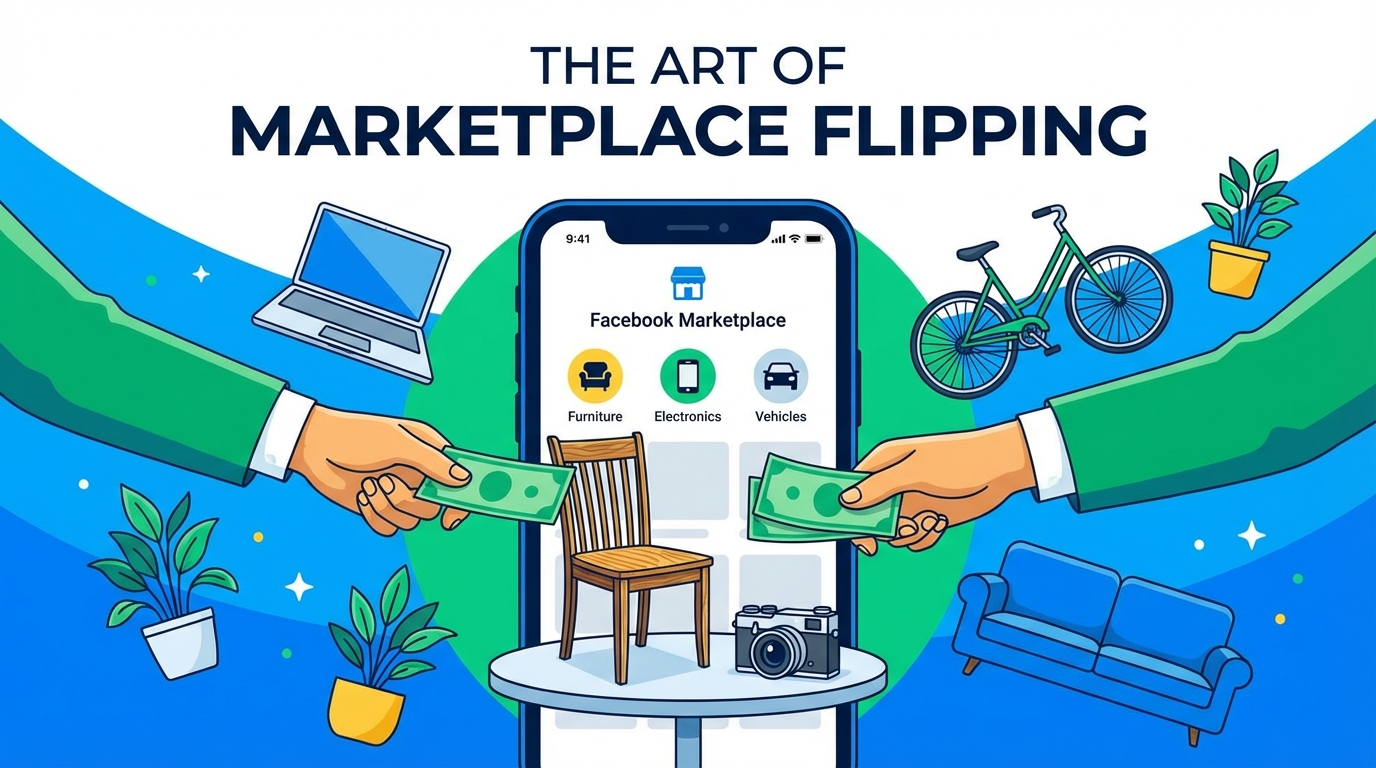
Facebook Marketplace has become the biggest local selling platform in the world. Over 1 billion people use it monthly. No listing fees. No shipping required for local sales. And every single day, people list items for a fraction of their real value because they want them gone fast. That gap between lazy pricing and actual market value is where flippers make thousands every month.
Flipping on Facebook Marketplace is the simplest side hustle to start. You literally need a phone and $50-$200 in starting capital. Buy low, sell high, repeat. Some people do this casually for beer money. Others scale it to $5,000-$10,000 per month as a real business.
📌 Key stat: Facebook Marketplace has over 1 billion monthly users. The average successful flipper earns $1,000-$5,000/month part-time. Top flippers earning $10,000+/month treat it as a full business with systems for sourcing, listing, and selling.
Most Profitable Categories to Flip
Furniture (40-100% Margins)
Furniture is the king of Marketplace flipping. People moving, downsizing, or redecorating practically give away solid wood dressers, dining tables, and bookshelves. A mid-century modern dresser picked up for $20 at a garage sale can sell for $150-$300 after a light cleanup. Solid wood pieces in good condition are always in demand.
The sweet spot is items that are heavy enough that most people won't ship them (reducing online competition) but light enough you can move with a buddy and a pickup truck or trailer.
Electronics and Appliances (30-60% Margins)
iPhones, iPads, gaming consoles, and brand-name appliances sell fast. People upgrade constantly and sell their old devices cheaply. Buy a used iPhone for $200, clean it up, factory reset it, and sell it for $350. Buy a working KitchenAid mixer for $80 at an estate sale and sell it for $180.
Always test electronics before buying. Dead devices are paperweights. Working devices are money.
Power Tools (50-80% Margins)
DeWalt, Milwaukee, Makita power tools hold their value incredibly well. People inherit tools they don't want, or contractors liquidate old inventory. A DeWalt impact driver bought for $40 at a garage sale sells for $100+ on Marketplace. Tool lots (bundles of mixed tools) offer even better margins when you split and sell individually.
Kids' Items (50-100% Margins)
Strollers, cribs, car seats (non-expired), and children's bikes are in constant demand. Parents outgrow items every 6-12 months and want them gone. Buy a barely-used UPPAbaby stroller for $100 and sell it for $250-$400. Baby stuff is a revolving door of inventory.
Sporting Equipment (40-80% Margins)
Gym equipment, bikes, golf clubs, kayaks, and camping gear. New Year's resolution equipment floods Marketplace by February every year. Buy it cheap. Hold it until demand returns in spring/summer. Seasonal arbitrage is a proven strategy.
Where to Source Inventory
Your profit margin is determined at purchase. Buy right, and selling is easy. Here are the best sourcing channels:
- Facebook Marketplace itself: Yes, you buy AND sell on the same platform. Search for underpriced items, haggle down further, and relist at market value. People who list with "Must go today" or "Moving sale" are your best targets.
- Garage and estate sales: Show up early Saturday mornings. Estate sales are goldmines because families often don't know what items are worth. Look for tools, furniture, electronics, and collectibles.
- Thrift stores: Goodwill, Salvation Army, and local thrift shops get random inventory daily. The key is going consistently (2-3 times per week) because inventory rotates. Find the stores in wealthier neighborhoods - better donations, lower prices.
- Curbside and free listings: People put perfectly good items on the curb. Follow "curb alert" and "free stuff" groups on Facebook. Drive neighborhoods the night before trash day. Free inventory means 100% profit margins.
- Auctions (online and local): GovDeals, PublicSurplus, and local auction houses sell surplus equipment, seized property, and liquidation lots. The deals can be incredible if you know what you're bidding on.
- Retail clearance: Walmart, Target, and Home Depot mark down seasonal items 50-90% off. Buy clearance items and sell at regular price on Marketplace. Check brickseek.com for local clearance deals.
How to List Items That Sell Fast
Most Marketplace listings are terrible. Bad photos, no description, wrong category. Doing the basics well makes your listings stand out.
- Photos: Take 5-8 clear photos in good lighting. Show the item from multiple angles. Include close-ups of any brand names, model numbers, or wear marks. Natural daylight beats flash every time. Clean the item before photographing.
- Title: Include the brand name, item type, and a key selling point. "DeWalt 20V Impact Driver - Like New" beats "drill for sale." People search by brand name.
- Description: State dimensions, condition, brand, model, and why you're selling. "Purchased 6 months ago, barely used, selling because I'm moving" is more compelling than "drill works good." Include the retail price to anchor value.
- Pricing: Price 10-15% above your target sale price. Buyers always negotiate. If you want $100, list at $115. You can "give in" to their offer and they feel like they won. Everyone's happy.
- Timing: List on Thursday and Friday evenings for weekend buyers. Renew listings every 5-7 days to stay at the top of search results. Post in local buy/sell groups alongside your Marketplace listing for extra visibility.
📌 Pro tip: Cross-list high-value items on Craigslist, OfferUp, and eBay simultaneously. Different platforms attract different buyers. A $500 item listed on three platforms sells 3x faster than on one platform alone.
Safety and Negotiation Tips
Staying Safe
- Meet in public places for transactions. Police stations often have designated "safe exchange zones" in their parking lots.
- Bring a friend for high-value items or use busy parking lots during daytime.
- Cash only for local sales. Never accept checks or electronic transfers to strangers.
- Don't invite strangers to your home. Use a nearby parking lot as your meetup spot.
- Trust your gut. If something feels off about a buyer, cancel the sale.
Negotiation Tactics
- As a buyer: Always ask "What's the lowest you'll take?" Most sellers have a price below their listing they'll accept. Point out any flaws to justify a lower offer. Bring exact cash in the amount you want to pay. Seeing cash in hand makes sellers more flexible.
- As a seller: Set your minimum price before anyone contacts you. Don't negotiate over messages. In person, buyers are more committed and less likely to lowball. Bundle items together to increase average sale value.
Scaling Your Flipping Business
Here's how the income progression typically works:
- Month 1 ($200-$500): Learning what sells. Making mistakes. First few successful flips.
- Month 2-3 ($500-$1,500): Better eye for deals. Faster turnaround. Building repeat buyer relationships.
- Month 4-6 ($1,000-$3,000): Established sourcing routes. Consistent inventory pipeline. Multiple sales per week.
- Month 6-12 ($2,000-$5,000+): Systems in place. Possibly adding shipping for higher-value items. Maybe specializing in a niche.
- Year 2+ ($5,000-$10,000+): Full business with storage space, possibly a van or trailer, maybe an employee for pickups and deliveries. Some flippers open physical stores or transition to wholesale.
Mistakes That Kill Your Margins
- Buying without checking comps. Before you buy anything to flip, check what similar items have SOLD for (not listed for) on Marketplace and eBay. Asking prices mean nothing. Sold prices are reality.
- Holding inventory too long. If it hasn't sold in 2 weeks, lower the price. Dead inventory is dead money. Cash flow beats perfect margins.
- Ignoring your time cost. Driving 45 minutes to pick up a $30 profit item isn't worth it. Factor in gas, time, and opportunity cost. Focus on items with $50+ profit margins or batch your pickups.
- No record keeping. Track every purchase and sale in a spreadsheet. What you bought, what you paid, what you sold it for, platform fees, gas costs. You need to know your real profit, not your gross sales.
- Getting emotionally attached. You're a reseller, not a collector. If you keep things you're supposed to sell, you have a shopping habit, not a business.
Facebook Marketplace flipping is one of the fastest ways to start making money with almost zero investment. You learn sales, negotiation, market pricing, and inventory management. Skills that transfer to any business. And unlike most "passive income" ideas, this one can put cash in your pocket this weekend.
For more side hustle ideas, read our guide on reselling collectibles online or explore the best side hustles in 2026.
Want weekly guides on building online income?
Real breakdowns, real numbers, zero fluff. Join 3,000+ readers.