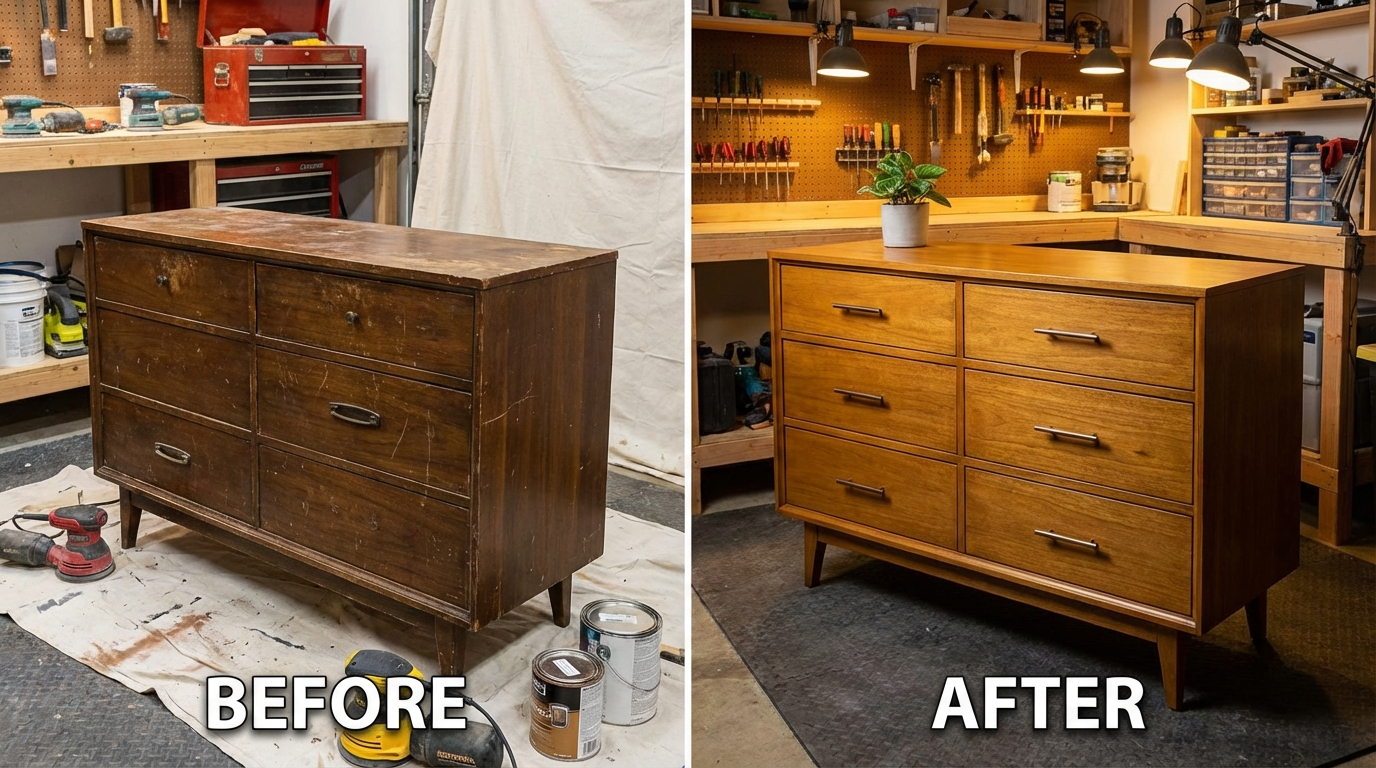
Furniture flipping is one of the most underrated side hustles. You buy used furniture cheaply, clean it up or refinish it, and sell it for 3-10x what you paid. No website needed. No complex tools. No inventory risk if you buy smart. People have been flipping furniture forever, but in 2026, online platforms make it faster, more scalable, and more profitable than ever.
The economics are hard to beat. A dresser picked up for free from a moving sale, cleaned and lightly sanded, sells for $150-$400. A mid-century modern sideboard bought for $50 at a thrift store, refinished with new hardware, sells for $500-$1,200. The margins in furniture flipping routinely exceed 200-500%.
📌 Key stat: Active furniture flippers report earning $1,000-$5,000/month working 10-20 hours per week. Some scale to $10,000+/month by specializing in mid-century modern, farmhouse, or industrial styles. Startup cost: under $200 for basic supplies.
Where to Source Furniture Cheaply
Free Sources
- Facebook Marketplace "free" listings: People giving away furniture they cannot be bothered selling. Set alerts for "free furniture" in your area. Speed matters. Good free pieces go within hours.
- Curbside and hard rubbish collection: Council clean-up days are gold mines. Drive around affluent neighborhoods the night before collection. You will find solid wood pieces, vintage items, and mid-century furniture that would sell for hundreds online.
- Moving sales and estate cleanouts: People moving quickly will practically give away furniture. Post on local community groups offering to help clear items.
Paid Sources (Still Cheap)
- Thrift stores: Goodwill, Salvation Army, Vinnies (in Australia), and local op shops. Visit regularly. The best pieces turn over quickly. Build relationships with staff who can tip you off about new arrivals.
- Garage and estate sales: Often priced to sell quickly. Arrive early for the best selection. End-of-day is good for negotiating lower prices on unsold items.
- Facebook Marketplace underpriced listings: Many sellers do not know the value of what they have. A solid wood dining table listed at $50 might be worth $400+ after a refinish.
- Auction houses and liquidation sales: Businesses closing down sell office and commercial furniture in bulk. Restaurant chairs, solid desks, and shelving units at pennies on the dollar.
Best Furniture Types to Flip
Not all furniture is worth flipping. Focus on these categories for the best return on your time:
- Mid-century modern: The most consistently profitable category. Clean lines, tapered legs, warm wood tones. Dressers, sideboards, dining tables, and accent chairs from the 1950s-1970s command premium prices. Buyers will pay $300-$2,000+ for authenticated pieces.
- Solid wood furniture: Real wood always outsells particleboard. Oak, walnut, teak, and maple pieces refinish beautifully and last forever. Test by weight — solid wood is heavy.
- Farmhouse and rustic: Distressed wood tables, barn-door style cabinets, and painted hutches. The farmhouse trend is not going anywhere. These pieces sell especially well on Facebook Marketplace to the home decor crowd.
- Upholstered accent chairs: Small enough to handle easily, high perceived value. Reupholstering is an advanced skill, but even cleaning and styling a good-bones chair can double its value.
- Desks and office furniture: Work-from-home demand keeps desk prices high. Solid writing desks, standing desk frames, and quality bookshelves flip quickly.
What to Avoid
- IKEA and flat-pack furniture (low resale value, hard to refinish)
- Anything with structural damage (wobbly legs, broken joints)
- Oversized pieces that are hard to transport and limit your buyer pool
- Mattresses and upholstered sofas unless you have cleaning equipment
- Pieces with smoke or pet damage (the smell rarely comes out completely)
Essential Refinishing Skills
You do not need to be a woodworker. These five techniques cover 90% of furniture flips:
- Deep cleaning: Most used furniture just needs a thorough clean. Murphy's Oil Soap for wood. Magic erasers for scuffs. Vacuum and steam clean upholstered pieces. This alone can triple value.
- Sanding and restaining: For wood pieces with surface damage, scratches, or outdated finishes. Sand with 120-220 grit, apply wood stain, finish with polyurethane. A $30 in materials transforms a $20 table into a $200 table.
- Painting: Chalk paint is the furniture flipper's best friend. It adheres to almost anything without primer, creates a beautiful matte finish, and dries fast. White, black, and sage green are always popular.
- Hardware swaps: New knobs and pulls instantly modernize dated dressers and cabinets. $2-5 per handle from Amazon or your local hardware store. Five minutes per drawer.
- Minor repairs: Tightening loose joints with wood glue, filling small holes with wood filler, replacing drawer slides. These are 10-minute fixes that remove objections from buyers.
Selling for Maximum Profit
Photography Matters More Than Anything
The difference between a $100 sale and a $400 sale is often the photos. Natural light, clean background, multiple angles. Stage the piece in a room setting if possible. A dresser photographed in a styled bedroom with a plant and a mirror sells for double compared to the same dresser photographed in a garage.
Best Platforms for Selling
- Facebook Marketplace: The number one platform for furniture. Free to list. Local pickup means no shipping hassles. Largest buyer pool. List here first, always.
- OfferUp: Strong for local sales, especially in the US. Good interface. Growing user base.
- Chairish: Premium marketplace for vintage and designer furniture. Higher price points, more sophisticated buyers. They take a 20% commission but pieces sell for significantly more.
- Etsy: Good for vintage (20+ years old) and truly unique pieces. Buyers on Etsy expect to pay premium prices for quality vintage furniture.
- Instagram: Build a portfolio of your flips. Before-and-after photos perform incredibly well. Many flippers build a following and sell directly through DMs.
Pricing Strategy
Research comparable items on each platform before pricing. Price 10-15% above your target to leave room for negotiation. Factor in your time: if a piece took 5 hours to refinish, make sure the profit justifies those hours at your target hourly rate.
Realistic Income Timeline
- Month 1: Learn sourcing and basic refinishing. Flip 2-3 pieces. Revenue: $200-$600.
- Month 2-3: Faster turnaround, better eye for value. Flip 4-6 pieces/month. Revenue: $500-$2,000.
- Month 4-6: Consistent pipeline. 6-10 pieces/month. Revenue: $1,500-$4,000.
- Month 6-12: Specialized style, repeat customers, Instagram following. Revenue: $3,000-$8,000.
Scaling Tips
- Specialize in a style. "The mid-century modern guy" or "the farmhouse flipper" builds a brand and repeat buyers.
- Document everything on social media. Before-and-after transformations get massive engagement. Each post is free advertising.
- Build a pickup truck fund. Access to a truck or trailer massively expands what you can source and deliver. Rent one initially if needed.
- Offer delivery. Charging $50-$100 for delivery increases sales and lets you serve a wider buyer radius.
- Network with estate sale companies and property managers. They regularly need furniture removed and can become a consistent source of quality pieces.
Furniture flipping combines creativity, hustle, and solid margins. It is physical work with tangible results. Every piece you flip builds skills that compound over time. For more side hustle ideas, explore our Facebook Marketplace flipping guide or browse the best side hustles in 2026.
Want weekly guides on building online income?
Real breakdowns, real numbers, zero fluff. Join 3,000+ readers.